
The Fields Inside Spencer County Property Tax Records
A Spencer County property tax search pulls from two offices. The Spencer County PVA keeps the ownership details and the assessed value for each parcel. The Spencer County sheriff then bills and collects against that assessment. Always read the year beside any figure. One parcel can carry a current assessed value and an older tax bill. It can also hold a delinquent certificate at the same time. Each marks a different step in the tax process.
| Field | What It Shows | Where |
|---|---|---|
| Land and improvements | Separate components behind the parcel's total assessment | PVA assessment record |
| Certified or working value | The value status for the named assessment year | PVA parcel record |
| Exemption and net value | Relief applied and the remaining taxable amount | PVA record |
| Tax district and bill | The district assignment and amount placed into collection | PVA and sheriff records |
| Delinquent certificate | An unpaid bill transferred into the clerk's certificate process | County clerk |
A tax bill is math, not a market opinion. Spencer County starts from the certified assessment. It subtracts any exemptions, and it applies the levies that apply to that property records entry. Kentucky law sets fair cash value as the standard. A dated assessment is one fact about a parcel. A negotiated sale price remains a different fact. To dig into valuation methods, see the Spencer County property value guide.
Who Assesses and Who Collects in Spencer County
The PVA office does the assessing. It values taxable real property, updates tax maps when ownership changes, records building characteristics, and administers exemptions. Dispute an assessment, and the first conference request goes to the PVA as well. The sheriff never sets value. That office handles billing and collection once the tax roll reaches it. When bills go unpaid long enough, the county clerk records the resulting delinquent certificates, along with any liens, assignments, or releases tied to them.
This division of labor matters. One Spencer County office may not answer for another's property records. Dates matter just as much. A deed, an assessment, and a tax bill can each be current at different moments. So keep the parcel number, tax year, office name, and viewing date together. Attach them to any Spencer County property tax record you use.
Spencer County PVA Search Fields and Results
The Spencer County PVA offers a free basic lookup covering ownership and assessed value. A subscription tier adds more depth. Transfer history, photos, improvement details, property class, tax information, and sales filters may sit behind that paid layer. The underlying vendor platform accepts several search modes: name, address, parcel ID, and alternate ID. Spencer County property records display on parcel cards through this system. Contact the PVA to confirm which fields currently appear on a Spencer County parcel card.
| Search route | Best input | What to retain |
|---|---|---|
| Address | Street number and normalized street name | Parcel ID, situs, assessment year |
| Owner name | Recorded surname or entity name | Owner display and mailing address |
| Parcel ID | The identifier copied exactly | Land, improvement, total, exemption, net |
| Sales subscription | Date, price, acreage, year built, neighborhood, sale type | Qualified-sale flag and comparable parcel details |
The Spencer County PVA valuation card may not show every field a researcher expects. Some components can be absent. Contact the PVA at 502-477-3207 if a needed figure is missing, or file a narrow public-record request that names the parcel and year.
From a Spencer County Address to the Tax Bill
Start any address-based search with the PVA. Street addresses can vary, while the parcel number stays stable as the bridge between assessment and collection records. The sheriff's tax collection guidance lays out the collection role and posts the current schedule. Check that page each year. Carrying an old discount or penalty date into a new tax year leads to errors.
- Search the PVA by street address and copy the parcel number, owner display, value, district, and assessment year.
- Use that identifier with the sheriff's tax collection record and confirm the bill year, amount, and payment status.
- Return to the PVA record to check whether an exemption and net taxable value were applied for that year.
- If the bill is delinquent, check the county clerk's published material for the certificate, list, assignment, or release trail.
- Assessed value
- The PVA's value for tax administration under Kentucky's fair-cash-value framework.
- Mill rate or levy
- The rate applied by a taxing authority to the taxable base.
- Homestead exemption
- A state-set reduction for a qualifying owner who meets the age or disability rules.
- Tax lien
- A legal claim tied to unpaid tax, distinct from a mortgage or judgment lien.
The Spencer County Exemption Record Needs a Year
Kentucky's homestead and disability exemption shows why dated sources matter. The state Department of Revenue lists $49,100 for the 2025 and 2026 tax years. An older amount, $39,300, has lingered on local pages. Trust the current state exemption source, and confirm the parcel's application with the PVA. The relief is not a blanket discount on every tax bill.
The exemption must be applied for and eligibility established. When you review Spencer County property tax records, compare three figures for the same year: the gross assessment, the exemption entry, and the net taxable value. A mismatch may just reflect timing, an unprocessed application, or a stale display. Ask the PVA rather than guessing.
Spencer County's Delinquent Certificate Trail
A delinquent tax certificate is not a deed in disguise. Buying one does not make you the owner of record. Instead, the Spencer County Clerk treats the process as a chain: the unpaid bill, the certificate itself, any third-party assignment, the required notice, payment or redemption, a release, and possibly a later deed or court action. Each link matters. The posted 2026 certificate sale is scheduled for July 22, with registration, a current list, and a priority process supplied by the clerk. For the current sale procedure, the official Spencer County Clerk delinquent-tax page carries the dated details.
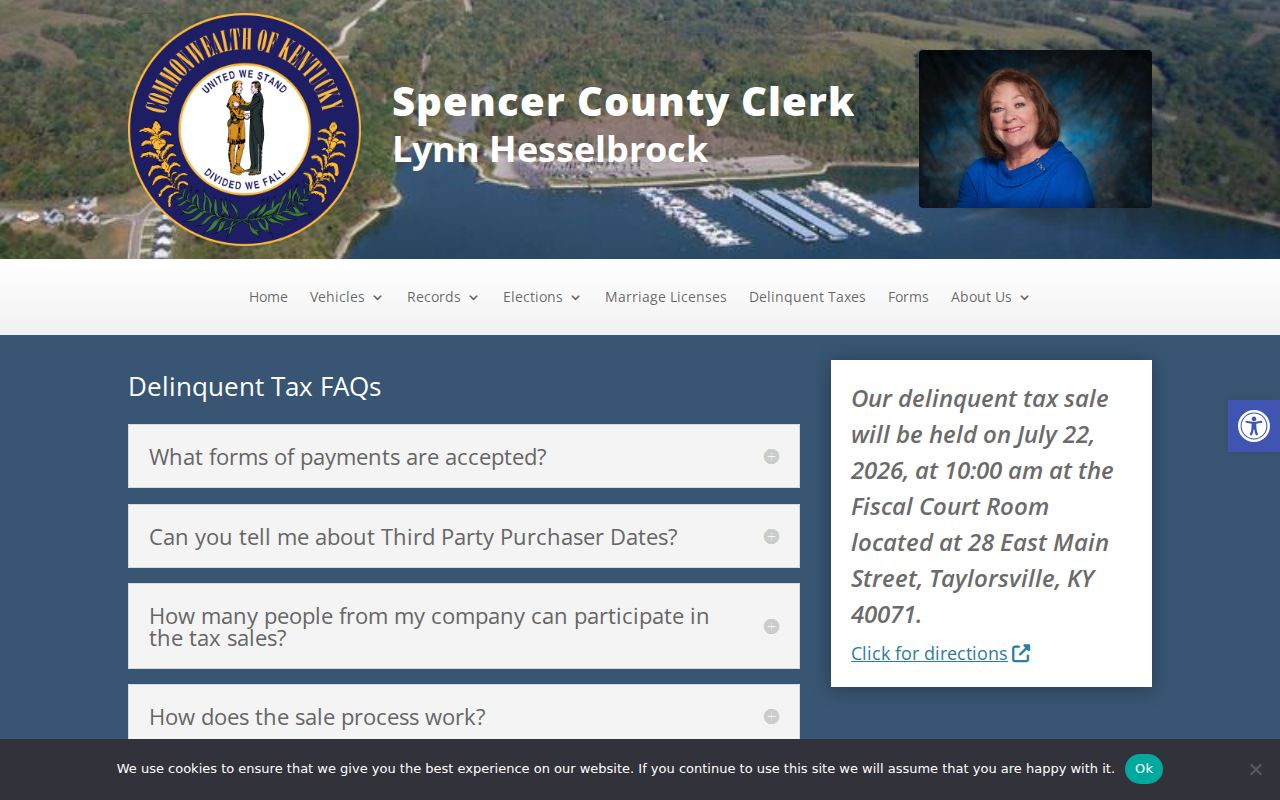
The clerk's delinquent-tax page works as a procedural checkpoint. Sale dates and lists change, so read the live notice before relying on either. Registration asks for purchaser contact details plus a priority list. That list should show the bill number, taxpayer, amount, prior-year book and page, and parcel. The clerk charges a $28 assignment fee. Each company may send one representative. Priority lists are due 48 hours before the sale. Deposits and other current terms come from the live notice. After payment, purchasers owe release obligations. Those include a 30-day rule in the county's current materials.
Tax Certificates, Liens, and Deeds Are Different Records
A Spencer County tax bill can trail behind several very different records. The Spencer County Clerk indexes deeds, mortgages, judgment liens, mechanics liens, tax certificates, assignments, and releases. It keeps them all under one roof. The similar names mislead people. A tax certificate documents the delinquent-tax process, while a mortgage secures a private debt. A deed records a conveyance. A release can end a listed encumbrance without moving any land. A property tax search that turns up delinquency is only the start. Write down the parcel number and bill details first. Then search the clerk's recorded instruments for the matching certificate, assignment, or release. Litigation may leave its own trail. CourtNet and the Spencer County Circuit Clerk keep separate case files. No lone index result settles a property's full legal status.
Spencer County's Annual Assessment Calendar
Assessment work in Spencer County is tied to January 1. Appeal season opens when notices are generally mailed in April. The PVA's open inspection period starts the first Monday in May and runs 13 days, Saturdays included. An owner can schedule a conference without an attorney. Useful evidence includes an appraisal, photographs, insurance information, a current listing, or neighborhood sales. Bring whatever ties your parcel to its assessment year.
Kentucky requires physical inspection of real property at least once every four years. The PVA may revalue more often. Not every parcel changes on the same day, though. A working value, a certified value, and a tax bill can reflect different stages of the same property tax record. That is why the year and status labels belong on anything you save.
If an online field is absent, contact the PVA at 2 West Main Street, Taylorsville, or 502-477-3207 with the parcel number and assessment year. The sheriff handles collection status. Send the clerk a narrow request for a delinquent certificate or release. This fallback respects the office split and keeps a missing web field from being mistaken for a missing record.
How to Challenge a Spencer County Assessment
Start with a conference at the PVA during the open inspection period. Bring evidence tied to the parcel and assessment year, not just a number you prefer. Comparable sales carry more weight when the properties share location and physical traits, and when sale dates and qualified-sale status are clear. Ask the PVA to walk through the valuation components. Understanding the sales basis matters just as much as the figure itself.
Do not miss the local sequence. After the PVA conference, forms for the Spencer County Board of Assessment Appeals must reach the County Clerk no later than one workday after inspection closes.
When the county board will not budge, Kentucky gives property owners one more avenue. That is the Kentucky Board of Tax Appeals. It is the next formal step. Build the file carefully. The appeal lives or dies on paperwork. Keep the notice in one place. Add everything from the conference, the filed form, your evidence, and any written decisions. A dated paper trail carries far more weight. A stray screenshot with no assessment year attached carries little.